segunda-feira, 30 de janeiro de 2012

Lasius flavus in their new home

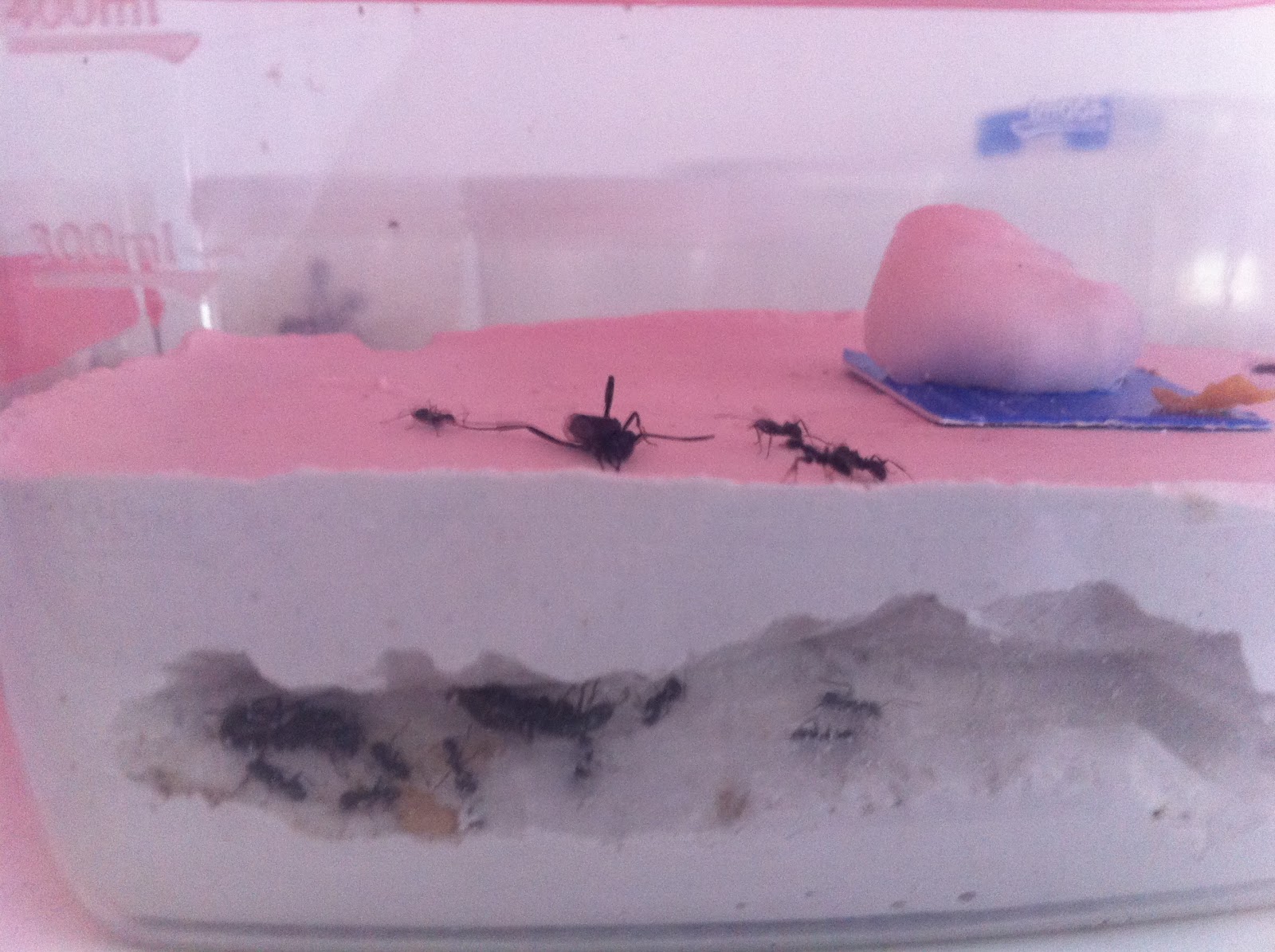
I have moved my Lasius flavus this morning to their new home. I had to move them by force in an emergency situation because the cotton in the test tube they were in was showing signs of mold, and I found that this species is particularly sensitive to it. They settled down very quickly, though.

As you can see, they scattered at first, all workers started moving about except for the queen, which stayed very still next to some of her eggs.


After the workers found the underground tunnels and finished exploring, the eggs, larvae and pupae were quickly moved to the first and second rooms. Then two workers started dragging the queen for a bit until she got the message. :)


After about fifteen minutes, they moved lower down to a room on the left, but I did not take pictures by then as I thought they had had enough stress for the day.

Fusca boom

The Formica fusca, despite having only one queen (the other two queens having been killed by their bethren), are expanding very fast (faster than any other colony I have).


Second Callow

The second Camponotus cruentatus callow ant was born yesterday. I was able to watch it all happening, but only took pictures at the end. The queen and first worker carefully took it out of the cocoon and started to clean it. After a few minutes of being tended to by her mother and sister, she slowly started moving her legs... Very beautiful to watch.


sexta-feira, 27 de janeiro de 2012

The Pheidole Triad

The three Pheidole queens are doing well, and have layed a very big pile of eggs which has turned to larvae. They are so much smaller than their mothers, though. These queens are very docile and do not seem to be very concerned when I open the lid to their temporary home.


First callow

The Camponotus cruentatus queen has had her first callow ant born. It was, in fact, bigger than I expected. She is doing well and she seems to be very healthy and active, constantly tending to the other pupae.


Moving on up

The Camponotus ligniperdus have got a new home (The one which used to house the Camponotus festinatus). They have settled in, but they have also discarded their eggs. I believe this is because they were in hybernation and the eggs were dead, but I cannot be sure.


Coronatus, maybe?

I believe this Acromyrmex is in fact coronatus. She is beautiful and doing well, although I cannot see any pupae yet.


sábado, 7 de janeiro de 2012

Formica Fight, Formica Funeral

Well, there is only one queen left as the other queen was killed by the workers. I was hoping this would not happen, but alas - it did. Oh well. At least the colony is going strong with almost 20 workers now, and a lot of brood. I won't add another tupperware pot yet, though, as the one they are in will still be confortable for another two or three months at least. Hopefully :)


Here's a video of them feeding on some cake:


Rose petals

The Acromyrmex are doing fine. All 7 queens have fungus, and three queens already have workers. It is great to watch them go about their business. It is almost time to give them more space. They absolutely love rose petals and leaves.


The festinatus is dead

Unfortunately, my Camponotus festinatus queen is dead. I don't know how it happened, I just woke up one morning a few days ago and she was dead.

Big Pheidole

I found three big Pheidole queens which I plan on keeping together. They are very beautiful and calm. I started creating their nest yesterday.


And a short video:

segunda-feira, 19 de dezembro de 2011

Formica Fun

One of the Formica queens was attacked and killed by her sisters, unfortunately. The two which remain do not show any signs of aggression towards each other, though. I will keep them together.

The colony is flourishing. There are 15 workers now, and lots of larvae. Here you can see them having fun with a  fly I found on my living room.


Shiny little thing

I was lying on my back on a wooden bench yesterday afternoon, and something heavy landed on my Chin. It started moving right away and I instinctively brushed it off and felt huge wings. That made me jump and I thought I was about to get stung by a wasp, but I was pleasantly surprised to look at the grass and see there was a huge queen scurrying along the floor.


Look at how big it is. I think it could be a Camponotus arboreus queen. It is 20mm long, and its head is amazingly huge. It also has a silver metallic shine on the sides of its gaster. One of the most beautiful queens I have come across.


quarta-feira, 14 de dezembro de 2011

Feeding Festinatus

This is my Camponotus festinatus queen feeding on a small moth larva worm.


The link to the movie in youtube is http://youtu.be/C0z18ZIrCX8

Firstborn

The Formica fusca have had their firstborn, finally. Very nice.


Over the course of three days, there are now 11 workers with the 3 queens. None have ventured outside the nest yet, though, but I'm sure it won't take long. Once they start foraging, this colony will explode I'm sure.


Almost there

I think it is just a matter of a few days now for the first Camponotus rufipes worker to be born. I will have to speed up her nest.


Flowers and more flowers

The Acromyrmex sp. has been working hard in her fungus garden. In just a few days its size has increased almost tenfold.


Here is a close up (as much as my iPhone will allow it) of her putting the yellow petals in the garden. You can see the tiny bits everywhere on top of the fungus.


quinta-feira, 8 de dezembro de 2011

Blooming garden

The other Acromyrmex has doubled the size of her "surrogate" garden in one day. Pretty impressive. She is always cutting up leaves and tending to it, it's cool to watch her on her hourly chopping chores :)